The Adelaide Club, located on North Terrace in Adelaide, South Australia, is a venerable institution that has been an integral part of the city's social and cultural fabric for well over a century. Founded in 1863, the club has a rich history and has played a significant role in shaping the social, intellectual, and business landscape of Adelaide.
One of the most remarkable aspects of the Adelaide Club is its historical significance. The club's establishment dates back to a time when Adelaide was a fledgling city, and its founders sought to create a gathering place for the city's elite and influential figures. Over the years, the Adelaide Club has evolved into a symbol of tradition and refinement, reflecting the city's growth and transformation. Its distinguished heritage is evident in the club's elegant architecture, which exudes the charm of a bygone era.
Situated on North Terrace, the Adelaide Club enjoys a prime location in the heart of the city. This central position not only enhances its accessibility but also grants members and guests unparalleled views of some of Adelaide's most iconic landmarks, such as the Adelaide Oval and the River Torrens. The club's location is not only convenient but also provides a sense of history, as North Terrace itself is home to several of the city's most renowned cultural institutions, including the South Australian Museum, Art Gallery of South Australia, and State Library of South Australia.
The Adelaide Club's primary function is to serve as a private members' club, offering a range of facilities and services. Members are drawn from diverse backgrounds, including business, academia, and the arts, creating a unique and dynamic community. The club provides an exclusive and elegant environment where members can network, socialize, and partake in various recreational activities. The facilities include dining rooms, lounges, a well-stocked library, a gymnasium, and even a billiards room. The club's culinary offerings are renowned, with its dining rooms serving as venues for both formal and casual gatherings.
The Adelaide Club is not just about exclusivity and luxury; it is also deeply committed to promoting culture, education, and the arts. The club frequently hosts events, lectures, and exhibitions that contribute to the intellectual enrichment of its members and the broader community. It fosters an environment where ideas and innovation thrive, making it a hub for intellectual discourse and cultural appreciation.
In conclusion, the Adelaide Club on North Terrace is not merely a place of leisure and privilege, but a vital institution that connects the past and present of Adelaide. Its historic significance, central location, diverse membership, and commitment to culture and education make it a symbol of the city's sophistication and progress. The Adelaide Club remains a testament to the enduring value of tradition and the importance of preserving a sense of community and culture in an ever-changing world.
- Sir Robert Richard Torrens: One of the Adelaide Club's early members was Sir Robert Richard Torrens, a prominent figure in the history of South Australia. He is best known for introducing the Torrens title system, a revolutionary land registration system that has been adopted worldwide. His contributions to land reform and the legal system significantly influenced the development of the state.
- Sir Thomas Playford IV: A member of the Adelaide Club, Sir Thomas Playford IV was a distinguished South Australian politician who served as Premier for a record 26 years from 1938 to 1965. His leadership had a profound impact on the state's economic and industrial development, and his policies helped establish South Australia as a significant manufacturing and automotive hub.
- Sir William Henry Bragg: Sir William Henry Bragg, a Nobel Prize-winning physicist, was a member of the Adelaide Club. He made significant contributions to the field of X-ray crystallography, and his work laid the foundation for the study of the structure of matter at the atomic and molecular levels. His groundbreaking research had a lasting impact on various scientific disciplines.
- Dame Roma Mitchell: Dame Roma Mitchell was a trailblazing member of the Adelaide Club and a respected figure in Australian law and politics. She became the first female Queen's Counsel in Australia and was later appointed as the first female judge in the Supreme Court of South Australia. Her dedication to justice and women's rights made her a role model for many.
- Sir Mark Oliphant: Sir Mark Oliphant, a prominent physicist and atomic scientist, was another notable member. He played a significant role in the Manhattan Project during World War II, contributing to the development of the atomic bomb. After the war, he continued to make valuable contributions to scientific research, serving as a key figure in the establishment of the Australian National University.
- John Howard Angas: A prominent South Australian pastoralist and businessman, John Howard Angas, was a member of the Adelaide Club. His family played a crucial role in the development of agriculture and viticulture in the region, and their legacy continues through the Angas Park brand.
These are just a few examples of the notable members associated with the Adelaide Club. The club's membership has consistently attracted individuals who have made significant contributions to South Australia and beyond, reflecting its historical importance as a hub for influential and accomplished figures. The collective achievements of these members have helped shape the club's legacy and its ongoing commitment to excellence and leadership in various fields.
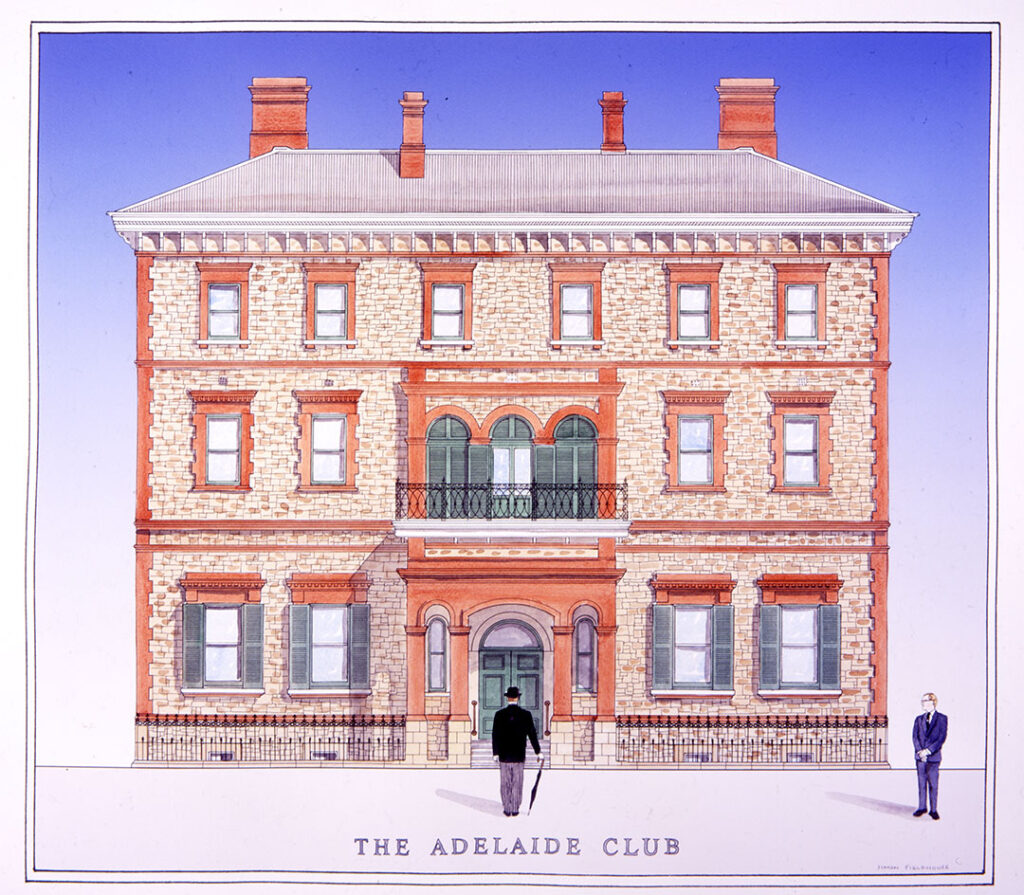
The Adelaide Club
The Adelaide Club, located on North Terrace in Adelaide, South Australia, is a venerable institution that has been an integral part of the city's social and cultural fabric for well over a century. Founded in 1863, the club has a rich history and has played a significant role in shaping the social, intellectual, and business landscape of Adelaide.
One of the most remarkable aspects of the Adelaide Club is its historical significance. The club's establishment dates back to a time when Adelaide was a fledgling city, and its founders sought to create a gathering place for the city's elite and influential figures. Over the years, the Adelaide Club has evolved into a symbol of tradition and refinement, reflecting the city's growth and transformation. Its distinguished heritage is evident in the club's elegant architecture, which exudes the charm of a bygone era.
Situated on North Terrace, the Adelaide Club enjoys a prime location in the heart of the city. This central position not only enhances its accessibility but also grants members and guests unparalleled views of some of Adelaide's most iconic landmarks, such as the Adelaide Oval and the River Torrens. The club's location is not only convenient but also provides a sense of history, as North Terrace itself is home to several of the city's most renowned cultural institutions, including the South Australian Museum, Art Gallery of South Australia, and State Library of South Australia.
The Adelaide Club's primary function is to serve as a private members' club, offering a range of facilities and services. Members are drawn from diverse backgrounds, including business, academia, and the arts, creating a unique and dynamic community. The club provides an exclusive and elegant environment where members can network, socialize, and partake in various recreational activities. The facilities include dining rooms, lounges, a well-stocked library, a gymnasium, and even a billiards room. The club's culinary offerings are renowned, with its dining rooms serving as venues for both formal and casual gatherings.
The Adelaide Club is not just about exclusivity and luxury; it is also deeply committed to promoting culture, education, and the arts. The club frequently hosts events, lectures, and exhibitions that contribute to the intellectual enrichment of its members and the broader community. It fosters an environment where ideas and innovation thrive, making it a hub for intellectual discourse and cultural appreciation.
In conclusion, the Adelaide Club on North Terrace is not merely a place of leisure and privilege, but a vital institution that connects the past and present of Adelaide. Its historic significance, central location, diverse membership, and commitment to culture and education make it a symbol of the city's sophistication and progress. The Adelaide Club remains a testament to the enduring value of tradition and the importance of preserving a sense of community and culture in an ever-changing world.
- Sir Robert Richard Torrens: One of the Adelaide Club's early members was Sir Robert Richard Torrens, a prominent figure in the history of South Australia. He is best known for introducing the Torrens title system, a revolutionary land registration system that has been adopted worldwide. His contributions to land reform and the legal system significantly influenced the development of the state.
- Sir Thomas Playford IV: A member of the Adelaide Club, Sir Thomas Playford IV was a distinguished South Australian politician who served as Premier for a record 26 years from 1938 to 1965. His leadership had a profound impact on the state's economic and industrial development, and his policies helped establish South Australia as a significant manufacturing and automotive hub.
- Sir William Henry Bragg: Sir William Henry Bragg, a Nobel Prize-winning physicist, was a member of the Adelaide Club. He made significant contributions to the field of X-ray crystallography, and his work laid the foundation for the study of the structure of matter at the atomic and molecular levels. His groundbreaking research had a lasting impact on various scientific disciplines.
- Dame Roma Mitchell: Dame Roma Mitchell was a trailblazing member of the Adelaide Club and a respected figure in Australian law and politics. She became the first female Queen's Counsel in Australia and was later appointed as the first female judge in the Supreme Court of South Australia. Her dedication to justice and women's rights made her a role model for many.
- Sir Mark Oliphant: Sir Mark Oliphant, a prominent physicist and atomic scientist, was another notable member. He played a significant role in the Manhattan Project during World War II, contributing to the development of the atomic bomb. After the war, he continued to make valuable contributions to scientific research, serving as a key figure in the establishment of the Australian National University.
- John Howard Angas: A prominent South Australian pastoralist and businessman, John Howard Angas, was a member of the Adelaide Club. His family played a crucial role in the development of agriculture and viticulture in the region, and their legacy continues through the Angas Park brand.
These are just a few examples of the notable members associated with the Adelaide Club. The club's membership has consistently attracted individuals who have made significant contributions to South Australia and beyond, reflecting its historical importance as a hub for influential and accomplished figures. The collective achievements of these members have helped shape the club's legacy and its ongoing commitment to excellence and leadership in various fields.