The Carlton Court House, located in the heart of Melbourne, is a historic and architectural gem that has stood the test of time. This iconic building has played a significant role in the cultural and legal history of Melbourne, and its rich heritage continues to captivate both locals and tourists alike.
Constructed in 1888, the Carlton Court House was designed by prominent architect George Raymond Johnson. Johnson, known for his contributions to Melbourne's architectural landscape, incorporated elements of the Italianate style into the building's design. The result is a stunning edifice with grand arches, decorative moldings, and a stately presence that reflects the architectural trends of the late 19th century.
The Carlton Court House has a fascinating history. Originally built as a courthouse, it served as a venue for legal proceedings and trials. The building's distinctive façade and imposing columns were meant to inspire a sense of authority and justice. Over the years, the courthouse witnessed countless legal battles, making it an integral part of Melbourne's legal history.
In addition to its legal significance, the Carlton Court House played a pivotal role in Melbourne's cultural and social life. It became a hub for various cultural events, including concerts, exhibitions, and public gatherings. The courtroom itself was often transformed into a concert hall, hosting performances by local musicians and artists. This dual identity as both a courthouse and cultural venue contributed to the building's unique place in Melbourne's heritage.
During the 20th century, the Carlton Court House underwent various renovations and adaptations, ensuring its continued relevance in a changing cityscape. Its courtroom was restored, maintaining its historical charm, while the adjacent spaces were converted into galleries and community spaces, reflecting Melbourne's commitment to preserving its heritage and fostering a vibrant arts scene.
Today, the Carlton Court House is a testament to Melbourne's dedication to preserving its architectural and cultural history. It stands as a symbol of the city's rich and diverse heritage, where the past and present seamlessly coexist. The building continues to serve as a cultural center, hosting exhibitions, concerts, and community events, while also offering visitors a glimpse into Melbourne's legal history through guided tours and informative displays.
In conclusion, the Carlton Court House is not merely a historical building but a living testament to Melbourne's rich past and vibrant present. It is a striking example of 19th-century architecture and a hub for cultural events that bridge the gap between history and contemporary life. As a cherished landmark, it reminds us of the importance of preserving our heritage while embracing the changes and progress of a dynamic city. For anyone interested in the history and culture of Melbourne, a visit to the Carlton Court House is a must, offering an opportunity to step back in time and explore the multifaceted layers of this magnificent city.
- Stately Facade: The Carlton Court House's exterior boasts an imposing and symmetrical facade that commands attention. The most distinctive feature is the grand entrance, marked by a prominent and gracefully arched portico supported by classical columns. These columns are both ornamental and functional, adding to the overall grandeur of the structure.
- Decorative Elements: Italianate architecture is characterized by its ornate details, and the Carlton Court House does not disappoint in this regard. Elaborate moldings, cornices, and decorative elements can be found throughout the building. These intricate details add a sense of opulence to the design, showcasing the craftsmanship of the era.
- Arched Windows: The building's windows are often arched or adorned with decorative surrounds, further contributing to the Italianate aesthetic. These large, arched windows not only allow for an abundance of natural light but also emphasize the building's connection to the outdoors.
- Symmetry and Proportion: Symmetry and proportion are fundamental principles of Italianate architecture. The Carlton Court House embodies these principles, with a balanced and harmonious layout. The central portico with its grand entrance, flanked by large windows on either side, creates a sense of equilibrium that is both visually appealing and architecturally sound.
- Roofline and Eaves: The building's roofline is another hallmark of the Italianate style. It features a low-pitched, hipped roof with prominent eaves adorned with decorative brackets. The roof adds to the overall sense of balance and emphasizes the horizontal lines of the structure.
- Use of Natural Materials: Italianate architecture often incorporates natural materials such as stone and brick. The Carlton Court House is constructed primarily from red brick, which is both durable and aesthetically pleasing. The brickwork is complemented by stone detailing, including the use of bluestone for the foundation and decorative elements.
Overall, the Carlton Court House's architectural design is a striking representation of Italianate architecture. It combines elements of grandeur and elegance with a commitment to symmetry and proportion. The intricate details and decorative elements make the building a standout example of this architectural style in Melbourne. Its timeless design continues to captivate visitors, serving as a living piece of history that reflects the architectural trends and craftsmanship of the late 19th century. The preservation of the Carlton Court House is a testament to Melbourne's dedication to conserving its architectural heritage for future generations to appreciate and admire.
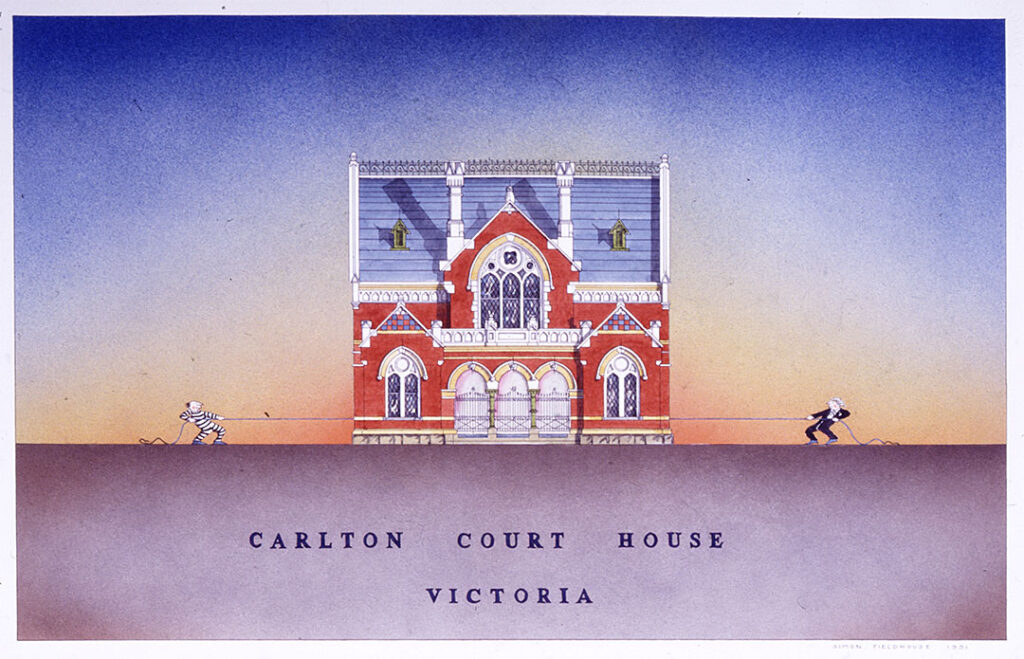
The Carlton Court House - Melbourne
The Carlton Court House, located in the heart of Melbourne, is a historic and architectural gem that has stood the test of time. This iconic building has played a significant role in the cultural and legal history of Melbourne, and its rich heritage continues to captivate both locals and tourists alike.
Constructed in 1888, the Carlton Court House was designed by prominent architect George Raymond Johnson. Johnson, known for his contributions to Melbourne's architectural landscape, incorporated elements of the Italianate style into the building's design. The result is a stunning edifice with grand arches, decorative moldings, and a stately presence that reflects the architectural trends of the late 19th century.
The Carlton Court House has a fascinating history. Originally built as a courthouse, it served as a venue for legal proceedings and trials. The building's distinctive façade and imposing columns were meant to inspire a sense of authority and justice. Over the years, the courthouse witnessed countless legal battles, making it an integral part of Melbourne's legal history.
In addition to its legal significance, the Carlton Court House played a pivotal role in Melbourne's cultural and social life. It became a hub for various cultural events, including concerts, exhibitions, and public gatherings. The courtroom itself was often transformed into a concert hall, hosting performances by local musicians and artists. This dual identity as both a courthouse and cultural venue contributed to the building's unique place in Melbourne's heritage.
During the 20th century, the Carlton Court House underwent various renovations and adaptations, ensuring its continued relevance in a changing cityscape. Its courtroom was restored, maintaining its historical charm, while the adjacent spaces were converted into galleries and community spaces, reflecting Melbourne's commitment to preserving its heritage and fostering a vibrant arts scene.
Today, the Carlton Court House is a testament to Melbourne's dedication to preserving its architectural and cultural history. It stands as a symbol of the city's rich and diverse heritage, where the past and present seamlessly coexist. The building continues to serve as a cultural center, hosting exhibitions, concerts, and community events, while also offering visitors a glimpse into Melbourne's legal history through guided tours and informative displays.
In conclusion, the Carlton Court House is not merely a historical building but a living testament to Melbourne's rich past and vibrant present. It is a striking example of 19th-century architecture and a hub for cultural events that bridge the gap between history and contemporary life. As a cherished landmark, it reminds us of the importance of preserving our heritage while embracing the changes and progress of a dynamic city. For anyone interested in the history and culture of Melbourne, a visit to the Carlton Court House is a must, offering an opportunity to step back in time and explore the multifaceted layers of this magnificent city.
- Stately Facade: The Carlton Court House's exterior boasts an imposing and symmetrical facade that commands attention. The most distinctive feature is the grand entrance, marked by a prominent and gracefully arched portico supported by classical columns. These columns are both ornamental and functional, adding to the overall grandeur of the structure.
- Decorative Elements: Italianate architecture is characterized by its ornate details, and the Carlton Court House does not disappoint in this regard. Elaborate moldings, cornices, and decorative elements can be found throughout the building. These intricate details add a sense of opulence to the design, showcasing the craftsmanship of the era.
- Arched Windows: The building's windows are often arched or adorned with decorative surrounds, further contributing to the Italianate aesthetic. These large, arched windows not only allow for an abundance of natural light but also emphasize the building's connection to the outdoors.
- Symmetry and Proportion: Symmetry and proportion are fundamental principles of Italianate architecture. The Carlton Court House embodies these principles, with a balanced and harmonious layout. The central portico with its grand entrance, flanked by large windows on either side, creates a sense of equilibrium that is both visually appealing and architecturally sound.
- Roofline and Eaves: The building's roofline is another hallmark of the Italianate style. It features a low-pitched, hipped roof with prominent eaves adorned with decorative brackets. The roof adds to the overall sense of balance and emphasizes the horizontal lines of the structure.
- Use of Natural Materials: Italianate architecture often incorporates natural materials such as stone and brick. The Carlton Court House is constructed primarily from red brick, which is both durable and aesthetically pleasing. The brickwork is complemented by stone detailing, including the use of bluestone for the foundation and decorative elements.
Overall, the Carlton Court House's architectural design is a striking representation of Italianate architecture. It combines elements of grandeur and elegance with a commitment to symmetry and proportion. The intricate details and decorative elements make the building a standout example of this architectural style in Melbourne. Its timeless design continues to captivate visitors, serving as a living piece of history that reflects the architectural trends and craftsmanship of the late 19th century. The preservation of the Carlton Court House is a testament to Melbourne's dedication to conserving its architectural heritage for future generations to appreciate and admire.