

Young Tarentine Sculpture by Alexandre Schoenewerk, 1871 - Musee d'Orsay Paris where the sculputre is exhibited, is home to a rich collection of art, ranging from Impressionism to Neoclassicism. Among its treasures is the exquisite sculpture "Young Tarentine" by Alexandre Schoenewerk, crafted in 1871. This remarkable piece exemplifies the essence of Neoclassical art with its grace, precision, and attention to detail, while also shedding light on the historical and artistic context of the period.
The Neoclassical movement emerged in the late 18th century as a reaction to the excesses of the Rococo and Baroque eras. Artists like Schoenewerk sought to revive the classical traditions of ancient Greece and Rome. "Young Tarentine" perfectly encapsulates this revival, depicting a young male figure in a pose reminiscent of ancient Greek statues. The artist's meticulous attention to detail, anatomical accuracy, and emphasis on idealized beauty is evident in every contour of the sculpture.
"Young Tarentine" portrays a youthful male with an athletic physique. His body is poised in a contrapposto stance, where one leg is bent while the other bears the body's weight. This classical pose not only showcases the artist's skill but also emphasizes the aesthetic ideal of the time – the celebration of youth, strength, and beauty. The figure's lithe form and flowing drapery serve to highlight the harmonious proportions, striking a balance between realism and idealization.
Beyond its aesthetic qualities, "Young Tarentine" conveys a sense of emotional depth. The figure's slightly tilted head, introspective gaze, and gentle smile suggest a moment of introspection. The sculpture hints at a narrative, perhaps representing a young athlete, musician, or poet in a moment of reflection. The historical context of 1871, the year it was created, is also crucial. This was a tumultuous period in French history, marked by the Franco-Prussian War and the Paris Commune. "Young Tarentine" offers a respite from the chaos of the time, presenting an idealized world that was, in many ways, an escape from the harsh realities of the period.
Alexandre Schoenewerk's "Young Tarentine" is a testament to the enduring power of Neoclassical art. Its influence can be seen in subsequent works, not only in sculpture but also in other artistic forms. It encapsulates the era's yearning for order, beauty, and a return to classical ideals.
"Young Tarentine" by Alexandre Schoenewerk, 1871, is a masterpiece that encapsulates the essence of Neoclassical art. It brings together classical aesthetics, idealized beauty, and emotional depth to create a work that resonates with viewers even today. Its portrayal of youth and grace provides a timeless reminder of the enduring power of art to transcend historical and cultural contexts. This sculpture stands as a testament to the Neoclassical movement and the artistic genius of Alexandre Schoenewerk.
- Inspiration and Influences: Schoenewerk drew inspiration from the classical sculptures of ancient Greece and Rome. The pose of the young male figure in "Young Tarentine" is reminiscent of Greek Kouros statues, which often depicted idealized male youths. The contrapposto stance, with one leg bearing the body's weight and the other relaxed, conveys a sense of naturalism and grace that was highly prized during the Neoclassical era.
- Drapery and Details: The sculpture's flowing drapery not only serves an aesthetic purpose but also highlights the artist's skill in working with marble. The intricate folds and creases in the fabric create a sense of movement and realism, contributing to the sculpture's overall elegance. Schoenewerk's attention to anatomical accuracy is evident in the meticulous rendering of the figure's musculature and facial features.
- Symbolism and Interpretation: While "Young Tarentine" is an idealized representation of youth and beauty, it also possesses an introspective quality. The figure's slightly tilted head and enigmatic smile invite interpretation. Some art historians suggest that the sculpture may symbolize the fleeting nature of youth and the importance of cherishing such moments. Others see it as a reflection of the classical ideal of balanced virtues, where the physical and intellectual aspects of a person are in harmony.
- Exhibition and Recognition: "Young Tarentine" has been on display at the Musee d'Orsay in Paris since its acquisition. This prestigious institution, known for its collection of 19th-century art, is a fitting home for the sculpture. Schoenewerk's work, including "Young Tarentine," is celebrated as an exemplary representation of the Neoclassical movement and the enduring influence of classical aesthetics.
- The Artist, Alexandre Schoenewerk: Alexandre Schoenewerk (1820-1885) was a French sculptor who gained recognition during the 19th century for his Neoclassical works. He was known for his ability to infuse classical ideals with emotional depth. "Young Tarentine" is considered one of his finest creations and is a testament to his skill and artistic vision.
In conclusion, "Young Tarentine" by Alexandre Schoenewerk remains a remarkable representation of Neoclassical art. Its meticulous craftsmanship, idealized beauty, and emotional depth make it a significant piece in the Musee d'Orsay's collection, and it continues to captivate art enthusiasts and scholars alike with its timeless elegance and profound symbolism.
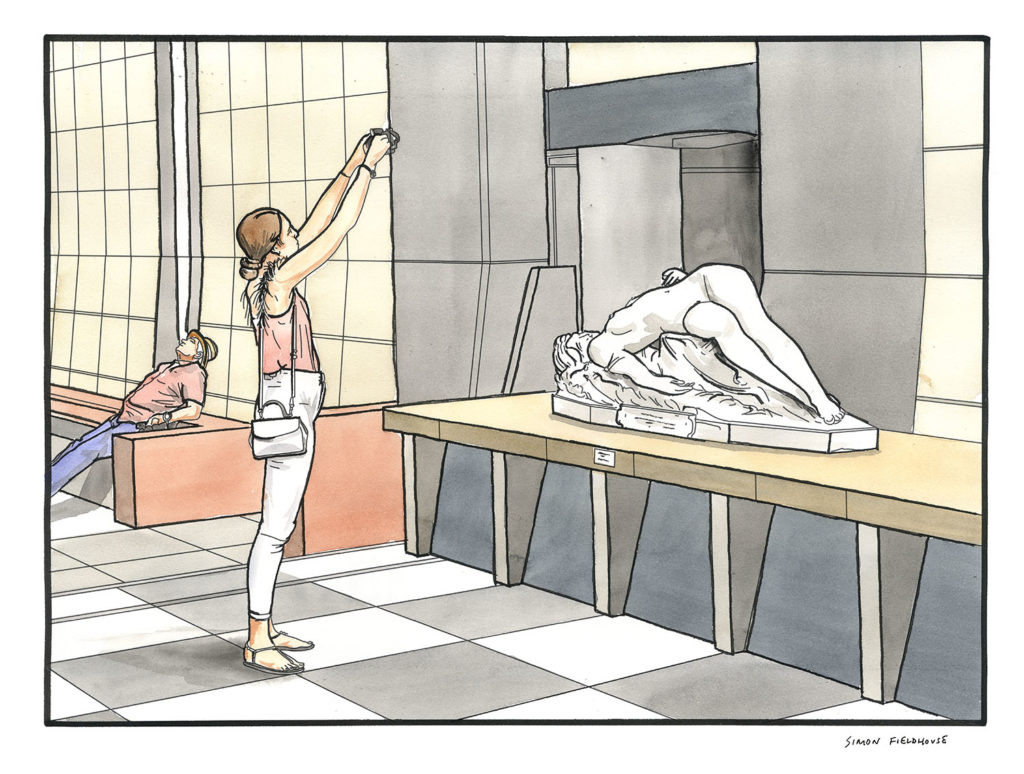
Young Tarentine Sculpture by Alexandre Schoenewerk, 1871 - Musee d'Orsay Paris
Young Tarentine Sculpture by Alexandre Schoenewerk, 1871 - Musee d'Orsay Paris where the sculputre is exhibited, is home to a rich collection of art, ranging from Impressionism to Neoclassicism. Among its treasures is the exquisite sculpture "Young Tarentine" by Alexandre Schoenewerk, crafted in 1871. This remarkable piece exemplifies the essence of Neoclassical art with its grace, precision, and attention to detail, while also shedding light on the historical and artistic context of the period.
The Neoclassical movement emerged in the late 18th century as a reaction to the excesses of the Rococo and Baroque eras. Artists like Schoenewerk sought to revive the classical traditions of ancient Greece and Rome. "Young Tarentine" perfectly encapsulates this revival, depicting a young male figure in a pose reminiscent of ancient Greek statues. The artist's meticulous attention to detail, anatomical accuracy, and emphasis on idealized beauty is evident in every contour of the sculpture.
"Young Tarentine" portrays a youthful male with an athletic physique. His body is poised in a contrapposto stance, where one leg is bent while the other bears the body's weight. This classical pose not only showcases the artist's skill but also emphasizes the aesthetic ideal of the time – the celebration of youth, strength, and beauty. The figure's lithe form and flowing drapery serve to highlight the harmonious proportions, striking a balance between realism and idealization.
Beyond its aesthetic qualities, "Young Tarentine" conveys a sense of emotional depth. The figure's slightly tilted head, introspective gaze, and gentle smile suggest a moment of introspection. The sculpture hints at a narrative, perhaps representing a young athlete, musician, or poet in a moment of reflection. The historical context of 1871, the year it was created, is also crucial. This was a tumultuous period in French history, marked by the Franco-Prussian War and the Paris Commune. "Young Tarentine" offers a respite from the chaos of the time, presenting an idealized world that was, in many ways, an escape from the harsh realities of the period.
Alexandre Schoenewerk's "Young Tarentine" is a testament to the enduring power of Neoclassical art. Its influence can be seen in subsequent works, not only in sculpture but also in other artistic forms. It encapsulates the era's yearning for order, beauty, and a return to classical ideals.
"Young Tarentine" by Alexandre Schoenewerk, 1871, is a masterpiece that encapsulates the essence of Neoclassical art. It brings together classical aesthetics, idealized beauty, and emotional depth to create a work that resonates with viewers even today. Its portrayal of youth and grace provides a timeless reminder of the enduring power of art to transcend historical and cultural contexts. This sculpture stands as a testament to the Neoclassical movement and the artistic genius of Alexandre Schoenewerk.
- Inspiration and Influences: Schoenewerk drew inspiration from the classical sculptures of ancient Greece and Rome. The pose of the young male figure in "Young Tarentine" is reminiscent of Greek Kouros statues, which often depicted idealized male youths. The contrapposto stance, with one leg bearing the body's weight and the other relaxed, conveys a sense of naturalism and grace that was highly prized during the Neoclassical era.
- Drapery and Details: The sculpture's flowing drapery not only serves an aesthetic purpose but also highlights the artist's skill in working with marble. The intricate folds and creases in the fabric create a sense of movement and realism, contributing to the sculpture's overall elegance. Schoenewerk's attention to anatomical accuracy is evident in the meticulous rendering of the figure's musculature and facial features.
- Symbolism and Interpretation: While "Young Tarentine" is an idealized representation of youth and beauty, it also possesses an introspective quality. The figure's slightly tilted head and enigmatic smile invite interpretation. Some art historians suggest that the sculpture may symbolize the fleeting nature of youth and the importance of cherishing such moments. Others see it as a reflection of the classical ideal of balanced virtues, where the physical and intellectual aspects of a person are in harmony.
- Exhibition and Recognition: "Young Tarentine" has been on display at the Musee d'Orsay in Paris since its acquisition. This prestigious institution, known for its collection of 19th-century art, is a fitting home for the sculpture. Schoenewerk's work, including "Young Tarentine," is celebrated as an exemplary representation of the Neoclassical movement and the enduring influence of classical aesthetics.
- The Artist, Alexandre Schoenewerk: Alexandre Schoenewerk (1820-1885) was a French sculptor who gained recognition during the 19th century for his Neoclassical works. He was known for his ability to infuse classical ideals with emotional depth. "Young Tarentine" is considered one of his finest creations and is a testament to his skill and artistic vision.
In conclusion, "Young Tarentine" by Alexandre Schoenewerk remains a remarkable representation of Neoclassical art. Its meticulous craftsmanship, idealized beauty, and emotional depth make it a significant piece in the Musee d'Orsay's collection, and it continues to captivate art enthusiasts and scholars alike with its timeless elegance and profound symbolism.