The Louvre Museum and its iconic glass pyramid in Paris, France, represent a harmonious blend of history and modernity, captivating millions of visitors from all around the world. This historic museum is not only a treasure trove of art and culture but also a symbol of architectural ingenuity, showcasing how tradition and innovation can coexist seamlessly.
The Louvre, originally a royal palace, dates back to the late 12th century when it was constructed by King Philip II. Over the centuries, it underwent numerous transformations and expansions, eventually becoming a museum during the French Revolution in 1793. Today, the Louvre is one of the world's most renowned cultural institutions, housing a staggering collection of over 380,000 objects, including the enigmatic Mona Lisa, the majestic Venus de Milo, and countless other priceless artworks. Its vast galleries and corridors take visitors on a journey through history and art, allowing them to explore a myriad of artistic styles and periods.
Nestled at the heart of this historical institution, the glass pyramid designed by architect I. M. Pei stands as a striking testament to modern architecture. The pyramid, completed in 1989, was a radical departure from the Louvre's classical façade. Comprising 673 diamond and triangular glass segments, the pyramid serves as the main entrance to the museum, leading visitors into a subterranean lobby. It's a mesmerizing interplay of old and new, as the pyramid's transparent structure contrasts with the imposing stone walls of the Louvre.
The pyramid serves both a functional and symbolic role. Functionally, it facilitates the flow of visitors into the museum, efficiently distributing the crowds. Symbolically, it embodies the idea that knowledge, like light, should be accessible to all. The transparent pyramid allows daylight to filter into the underground entrance, creating a sense of openness and inviting exploration. It's a reminder that the Louvre is not just a repository of the past, but a living institution that continues to evolve and inspire.
Critics initially greeted the pyramid with skepticism and controversy, fearing that it would detract from the historical grandeur of the Louvre. However, time has proven that the pyramid's addition was an inspired choice. It has not only become an integral part of the Louvre's identity but also a symbol of Paris itself, recognized worldwide.
In conclusion, the Louvre Museum and its glass pyramid are a testament to the enduring power of art, history, and human creativity. The Louvre's vast collection represents a journey through time, while the pyramid stands as a beacon of innovation and modernity. Together, they form a living, breathing institution that continues to inspire and captivate people from all corners of the globe. The juxtaposition of history and modernity at the Louvre is a reminder that, in the world of art and culture, the past and present can coexist harmoniously, transcending boundaries and enriching our understanding of the world.
Some key aspects of I. M. Pei's life and architectural career include:
- Education and Early Career: I. M. Pei's architectural journey began at the Massachusetts Institute of Technology (MIT), where he earned his bachelor's degree in architecture. He later attended Harvard University's Graduate School of Design, where he studied under the guidance of renowned architects like Walter Gropius and Marcel Breuer. These educational experiences played a pivotal role in shaping his architectural philosophy.
- Early Work: Pei's early work included projects such as the Mile High Center in Denver, Colorado, and the National Center for Atmospheric Research in Boulder, Colorado. These buildings reflected his interest in modernist design and the innovative use of materials.
- Museum Designs: I. M. Pei was particularly well-known for his museum designs. The most famous of these is perhaps the Louvre Pyramid, which we discussed earlier. Other notable museum projects include the National Gallery of Art's East Building in Washington, D.C., and the Rock and Roll Hall of Fame in Cleveland, Ohio.
- Cultural Sensitivity: One of Pei's hallmarks was his ability to incorporate a profound understanding of cultural and historical contexts into his designs. He believed that architecture should reflect its environment and the people it serves. This approach is evident in his work on projects like the Suzhou Museum in China, which seamlessly blends traditional Chinese design elements with modern architectural principles.
- Awards and Recognition: I. M. Pei received numerous awards and honors during his career, including the Pritzker Architecture Prize in 1983, which is often considered the highest honor in the field of architecture. He was also awarded the Presidential Medal of Freedom in 1992.
- Legacy: I. M. Pei's architectural legacy continues to influence and inspire architects and designers around the world. His buildings are celebrated for their striking and innovative designs that push the boundaries of what is possible in architecture.
I. M. Pei's career is a testament to the power of architecture to transcend time and place. His ability to merge modernist principles with cultural sensitivity and innovation left an indelible mark on the architectural world. His work continues to be celebrated for its iconic designs, and his legacy lives on in the buildings he created and the architects he inspired.
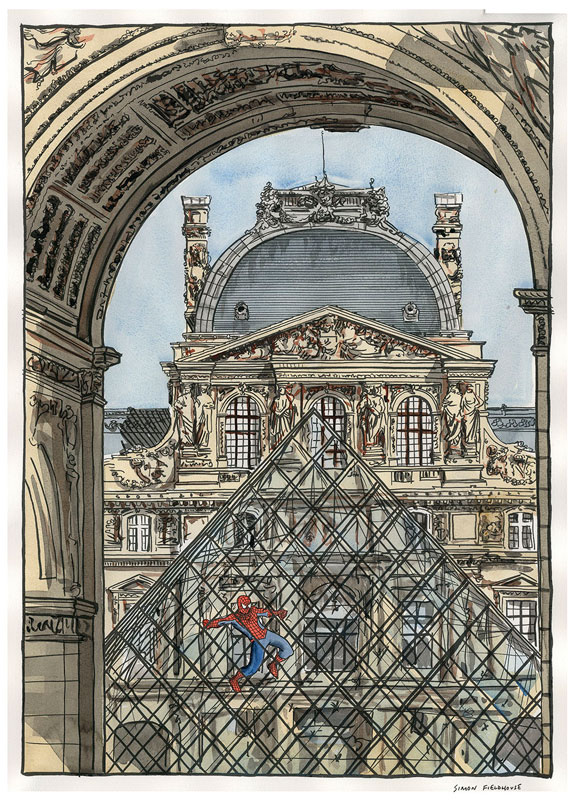
The Louvre Museum
The Louvre Museum and its iconic glass pyramid in Paris, France, represent a harmonious blend of history and modernity, captivating millions of visitors from all around the world. This historic museum is not only a treasure trove of art and culture but also a symbol of architectural ingenuity, showcasing how tradition and innovation can coexist seamlessly.
The Louvre, originally a royal palace, dates back to the late 12th century when it was constructed by King Philip II. Over the centuries, it underwent numerous transformations and expansions, eventually becoming a museum during the French Revolution in 1793. Today, the Louvre is one of the world's most renowned cultural institutions, housing a staggering collection of over 380,000 objects, including the enigmatic Mona Lisa, the majestic Venus de Milo, and countless other priceless artworks. Its vast galleries and corridors take visitors on a journey through history and art, allowing them to explore a myriad of artistic styles and periods.
Nestled at the heart of this historical institution, the glass pyramid designed by architect I. M. Pei stands as a striking testament to modern architecture. The pyramid, completed in 1989, was a radical departure from the Louvre's classical façade. Comprising 673 diamond and triangular glass segments, the pyramid serves as the main entrance to the museum, leading visitors into a subterranean lobby. It's a mesmerizing interplay of old and new, as the pyramid's transparent structure contrasts with the imposing stone walls of the Louvre.
The pyramid serves both a functional and symbolic role. Functionally, it facilitates the flow of visitors into the museum, efficiently distributing the crowds. Symbolically, it embodies the idea that knowledge, like light, should be accessible to all. The transparent pyramid allows daylight to filter into the underground entrance, creating a sense of openness and inviting exploration. It's a reminder that the Louvre is not just a repository of the past, but a living institution that continues to evolve and inspire.
Critics initially greeted the pyramid with skepticism and controversy, fearing that it would detract from the historical grandeur of the Louvre. However, time has proven that the pyramid's addition was an inspired choice. It has not only become an integral part of the Louvre's identity but also a symbol of Paris itself, recognized worldwide.
In conclusion, the Louvre Museum and its glass pyramid are a testament to the enduring power of art, history, and human creativity. The Louvre's vast collection represents a journey through time, while the pyramid stands as a beacon of innovation and modernity. Together, they form a living, breathing institution that continues to inspire and captivate people from all corners of the globe. The juxtaposition of history and modernity at the Louvre is a reminder that, in the world of art and culture, the past and present can coexist harmoniously, transcending boundaries and enriching our understanding of the world.
Some key aspects of I. M. Pei's life and architectural career include:
- Education and Early Career: I. M. Pei's architectural journey began at the Massachusetts Institute of Technology (MIT), where he earned his bachelor's degree in architecture. He later attended Harvard University's Graduate School of Design, where he studied under the guidance of renowned architects like Walter Gropius and Marcel Breuer. These educational experiences played a pivotal role in shaping his architectural philosophy.
- Early Work: Pei's early work included projects such as the Mile High Center in Denver, Colorado, and the National Center for Atmospheric Research in Boulder, Colorado. These buildings reflected his interest in modernist design and the innovative use of materials.
- Museum Designs: I. M. Pei was particularly well-known for his museum designs. The most famous of these is perhaps the Louvre Pyramid, which we discussed earlier. Other notable museum projects include the National Gallery of Art's East Building in Washington, D.C., and the Rock and Roll Hall of Fame in Cleveland, Ohio.
- Cultural Sensitivity: One of Pei's hallmarks was his ability to incorporate a profound understanding of cultural and historical contexts into his designs. He believed that architecture should reflect its environment and the people it serves. This approach is evident in his work on projects like the Suzhou Museum in China, which seamlessly blends traditional Chinese design elements with modern architectural principles.
- Awards and Recognition: I. M. Pei received numerous awards and honors during his career, including the Pritzker Architecture Prize in 1983, which is often considered the highest honor in the field of architecture. He was also awarded the Presidential Medal of Freedom in 1992.
- Legacy: I. M. Pei's architectural legacy continues to influence and inspire architects and designers around the world. His buildings are celebrated for their striking and innovative designs that push the boundaries of what is possible in architecture.
I. M. Pei's career is a testament to the power of architecture to transcend time and place. His ability to merge modernist principles with cultural sensitivity and innovation left an indelible mark on the architectural world. His work continues to be celebrated for its iconic designs, and his legacy lives on in the buildings he created and the architects he inspired.