The Royal Adelaide Hospital (RAH), located on North Terrace in Adelaide, South Australia, stands as a testament to the city's rich history and its commitment to providing exceptional healthcare services. This iconic structure has played a vital role in the healthcare landscape of South Australia, embodying both architectural elegance and medical innovation.
The history of the Royal Adelaide Hospital dates back to the early 19th century when it was established as a tent hospital in 1840. The construction of the current historic building began in 1849, and it officially opened its doors to patients in 1856. Designed by colonial architect Edward Hamilton, the RAH Historic Building is a fine example of Victorian-era architecture with its impressive neoclassical façade and ornate detailing. Its grandeur is accentuated by the iconic clocktower, which has become a landmark of Adelaide's skyline.
Beyond its architectural significance, the Royal Adelaide Hospital has a rich medical history. It has been at the forefront of healthcare innovation for over a century. The hospital was known for its pioneering work in various medical fields, including radiology, surgery, and medical research. The RAH Historic Building has witnessed the evolution of medical practices and has contributed significantly to the advancement of healthcare in South Australia. It has played a pivotal role in training generations of healthcare professionals and providing medical services to the community.
In addition to its medical achievements, the RAH Historic Building has also played a significant cultural role in the city. It has hosted countless community events, fundraisers, and public health education programs. The hospital's presence on North Terrace, a street often referred to as Adelaide's "cultural boulevard," further highlights its integration into the city's cultural fabric.
Over the years, the Royal Adelaide Hospital underwent multiple expansions and modernizations, resulting in the construction of the new RAH, which opened in 2017, marking a new era in healthcare for South Australia. The RAH Historic Building, however, has retained its significance as a symbol of the city's medical heritage. While no longer functioning as a hospital, it has been repurposed to house various government departments and organizations.
Today, the RAH Historic Building is not just a historic structure but a symbol of South Australia's commitment to preserving its heritage and valuing its historical landmarks. It stands as a reminder of the city's progress and the evolution of healthcare services, from its humble beginnings as a tent hospital to the modern healthcare facilities of today.
In conclusion, the Royal Adelaide Hospital Historic Building on North Terrace is a testament to Adelaide's rich history, architectural heritage, and its commitment to healthcare excellence. It has stood the test of time, witnessing the transformation of healthcare practices and serving as a cultural icon in the city. As a historic landmark, it continues to be an integral part of Adelaide's identity, reminding us of the past while shaping the future.
- Neoclassical Design: The RAH Historic Building is emblematic of neoclassical architecture, a style that draws inspiration from ancient Greek and Roman design principles. The most striking feature is the imposing façade, with its rows of stately columns and pilasters, which create a sense of order and symmetry. The building's neoclassical elements, including the use of columns, pediments, and decorative friezes, give it a timeless and elegant quality.
- Symmetry and Proportion: The building is characterized by a strong sense of symmetry and proportion, hallmarks of neoclassical architecture. The façade is divided into sections, with a central portico flanked by wings on either side. This balanced design conveys a sense of harmony and classical grace. The use of symmetry is further emphasized by the repetition of architectural details and ornamentation.
- Iconic Clocktower: Perhaps the most recognizable feature of the RAH Historic Building is its iconic clocktower, which adds a vertical element to the otherwise horizontal structure. The clocktower is adorned with intricate detailing and crowned with a dome, making it a prominent feature on Adelaide's skyline. The clock itself is not only functional but also symbolic, representing the hospital's role as a keeper of time and a place of healing.
- Ornate Detailing: The building's neoclassical style is rich in ornate detailing. Elaborate friezes, decorative moldings, and intricate stone carvings adorn the exterior, showcasing the craftsmanship and attention to detail that went into its construction. These ornate elements serve to further enhance the building's aesthetic appeal and historical significance.
- Material and Construction: The RAH Historic Building was constructed using local stone, primarily bluestone, which is not only durable but also lends a sense of permanence to the structure. The use of stone, combined with the meticulous craftsmanship, contributes to the building's enduring architectural beauty.
- Interior Design: While the exterior of the building is awe-inspiring, the interior also boasts architectural splendor. The grand entrance hall features a soaring dome with a stunning glass oculus, flooding the space with natural light. The interior design complements the neoclassical exterior, with features such as marble floors and elegant wooden details.
In summary, the Royal Adelaide Hospital Historic Building on North Terrace is a prime example of neoclassical architecture, marked by its neoclassical design, symmetry, ornate detailing, and iconic clocktower. It represents not only a historic landmark but a testament to the architectural heritage of Adelaide and South Australia. This iconic structure continues to captivate and inspire all who visit, preserving the legacy of a bygone era while remaining a symbol of enduring beauty and elegance in the heart of the city.
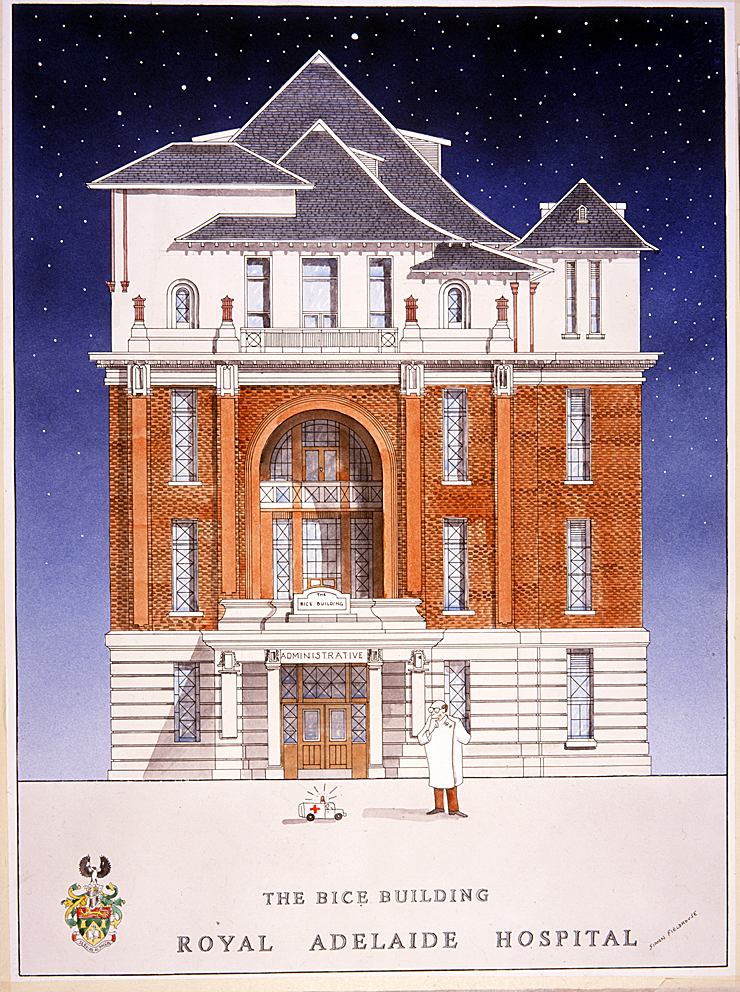
Royal Adelaide Hospital
The Royal Adelaide Hospital (RAH), located on North Terrace in Adelaide, South Australia, stands as a testament to the city's rich history and its commitment to providing exceptional healthcare services. This iconic structure has played a vital role in the healthcare landscape of South Australia, embodying both architectural elegance and medical innovation.
The history of the Royal Adelaide Hospital dates back to the early 19th century when it was established as a tent hospital in 1840. The construction of the current historic building began in 1849, and it officially opened its doors to patients in 1856. Designed by colonial architect Edward Hamilton, the RAH Historic Building is a fine example of Victorian-era architecture with its impressive neoclassical façade and ornate detailing. Its grandeur is accentuated by the iconic clocktower, which has become a landmark of Adelaide's skyline.
Beyond its architectural significance, the Royal Adelaide Hospital has a rich medical history. It has been at the forefront of healthcare innovation for over a century. The hospital was known for its pioneering work in various medical fields, including radiology, surgery, and medical research. The RAH Historic Building has witnessed the evolution of medical practices and has contributed significantly to the advancement of healthcare in South Australia. It has played a pivotal role in training generations of healthcare professionals and providing medical services to the community.
In addition to its medical achievements, the RAH Historic Building has also played a significant cultural role in the city. It has hosted countless community events, fundraisers, and public health education programs. The hospital's presence on North Terrace, a street often referred to as Adelaide's "cultural boulevard," further highlights its integration into the city's cultural fabric.
Over the years, the Royal Adelaide Hospital underwent multiple expansions and modernizations, resulting in the construction of the new RAH, which opened in 2017, marking a new era in healthcare for South Australia. The RAH Historic Building, however, has retained its significance as a symbol of the city's medical heritage. While no longer functioning as a hospital, it has been repurposed to house various government departments and organizations.
Today, the RAH Historic Building is not just a historic structure but a symbol of South Australia's commitment to preserving its heritage and valuing its historical landmarks. It stands as a reminder of the city's progress and the evolution of healthcare services, from its humble beginnings as a tent hospital to the modern healthcare facilities of today.
In conclusion, the Royal Adelaide Hospital Historic Building on North Terrace is a testament to Adelaide's rich history, architectural heritage, and its commitment to healthcare excellence. It has stood the test of time, witnessing the transformation of healthcare practices and serving as a cultural icon in the city. As a historic landmark, it continues to be an integral part of Adelaide's identity, reminding us of the past while shaping the future.
- Neoclassical Design: The RAH Historic Building is emblematic of neoclassical architecture, a style that draws inspiration from ancient Greek and Roman design principles. The most striking feature is the imposing façade, with its rows of stately columns and pilasters, which create a sense of order and symmetry. The building's neoclassical elements, including the use of columns, pediments, and decorative friezes, give it a timeless and elegant quality.
- Symmetry and Proportion: The building is characterized by a strong sense of symmetry and proportion, hallmarks of neoclassical architecture. The façade is divided into sections, with a central portico flanked by wings on either side. This balanced design conveys a sense of harmony and classical grace. The use of symmetry is further emphasized by the repetition of architectural details and ornamentation.
- Iconic Clocktower: Perhaps the most recognizable feature of the RAH Historic Building is its iconic clocktower, which adds a vertical element to the otherwise horizontal structure. The clocktower is adorned with intricate detailing and crowned with a dome, making it a prominent feature on Adelaide's skyline. The clock itself is not only functional but also symbolic, representing the hospital's role as a keeper of time and a place of healing.
- Ornate Detailing: The building's neoclassical style is rich in ornate detailing. Elaborate friezes, decorative moldings, and intricate stone carvings adorn the exterior, showcasing the craftsmanship and attention to detail that went into its construction. These ornate elements serve to further enhance the building's aesthetic appeal and historical significance.
- Material and Construction: The RAH Historic Building was constructed using local stone, primarily bluestone, which is not only durable but also lends a sense of permanence to the structure. The use of stone, combined with the meticulous craftsmanship, contributes to the building's enduring architectural beauty.
- Interior Design: While the exterior of the building is awe-inspiring, the interior also boasts architectural splendor. The grand entrance hall features a soaring dome with a stunning glass oculus, flooding the space with natural light. The interior design complements the neoclassical exterior, with features such as marble floors and elegant wooden details.
In summary, the Royal Adelaide Hospital Historic Building on North Terrace is a prime example of neoclassical architecture, marked by its neoclassical design, symmetry, ornate detailing, and iconic clocktower. It represents not only a historic landmark but a testament to the architectural heritage of Adelaide and South Australia. This iconic structure continues to captivate and inspire all who visit, preserving the legacy of a bygone era while remaining a symbol of enduring beauty and elegance in the heart of the city.