
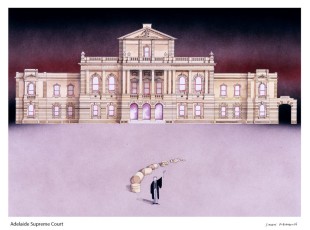
The Supreme Court of Adelaide, located at 241-299 Victoria Square, at the corner of Gouger Street, is an iconic institution in the heart of South Australia's capital city. As one of the most significant judicial bodies in the state, this grand building stands as a symbol of justice and the rule of law.
The history of the Supreme Court in Adelaide dates back to the early days of South Australia's settlement. In 1837, only a few years after the founding of the colony, the first Supreme Court was established. The court initially met in various temporary locations before a purpose-built courthouse was completed in 1843. However, as the city grew, so did the need for a more substantial and architecturally impressive structure. Thus, in the late 19th century, the current Supreme Court building was designed and constructed.
The Supreme Court's architectural significance cannot be overstated. Designed by architect George Strickland Kingston, it is a striking example of neoclassical architecture. The building's facade features imposing columns, a grand entrance, and intricate detailing, evoking a sense of tradition and solemnity. The prominent location on Victoria Square ensures that it is a focal point for both locals and visitors to Adelaide.
Inside the Supreme Court of Adelaide, the magnificence continues. The main courtroom, known as the Banco Court, is a marvel of design, with its soaring ceilings, elegant woodwork, and a sense of history that is palpable. This is where many of the state's most significant legal proceedings have taken place, from high-profile criminal cases to civil disputes of great importance. The Banco Court embodies the principles of justice, impartiality, and transparency, essential to the proper functioning of any judicial institution.
Beyond its architectural significance, the Supreme Court of Adelaide holds a vital role in upholding the rule of law in South Australia. It serves as the highest court in the state, with a wide range of jurisdiction, handling cases in areas such as criminal law, civil law, probate, and administrative law. Its decisions set legal precedents, ensuring consistency and fairness in the application of the law throughout the state.
The Supreme Court building also houses the Supreme Court Library, which is an invaluable resource for legal practitioners, scholars, and the general public. The library contains an extensive collection of legal texts, documents, and historical records, making it an essential hub for legal research and education.
In conclusion, the Supreme Court of Adelaide, situated at 241-299 Victoria Square, is a pillar of justice and a symbol of tradition in South Australia. Its neoclassical architecture, central location, and historical significance make it an integral part of the city's landscape. More importantly, it plays a crucial role in the state's legal system, upholding the principles of justice and ensuring the rule of law. The Supreme Court of Adelaide is not merely a building but a cornerstone of justice and the legal system in South Australia.
- Neoclassical Elements: The design of the Supreme Court building is deeply rooted in the neoclassical tradition. Neoclassical architecture draws inspiration from the classical architecture of ancient Greece and Rome, characterized by features like columns, pediments, and symmetry. In this case, the building prominently features grand Ionic columns at its entrance, which add a sense of dignity and classical beauty.
- Symmetry: Neoclassical structures are often highly symmetrical, and the Supreme Court building is no exception. The facade is symmetrically organized around the central entrance, creating a balanced and harmonious visual effect. This symmetry is not only aesthetically pleasing but also reflects the principles of balance and justice associated with the court.
- Intricate Detailing: The building's exterior boasts meticulous detailing, such as the decorative friezes and moldings that adorn the columns and the pediment. These details reflect the craftsmanship of the era in which the building was constructed and showcase the attention to detail that was a hallmark of neoclassical design.
- Ionic Columns: The Ionic columns, with their signature scroll-like capitals, are one of the most distinctive features of the building. These columns are not only ornamental but also serve to support the structure, highlighting both the building's aesthetic and functional considerations.
- Grand Entrance: The main entrance is a grand archway with a large, imposing door, flanked by the Ionic columns. It is a symbol of the significance and authority of the institution housed within. The entrance's design evokes a sense of formality and reverence for the rule of law.
- Historical Context: The neoclassical style was prevalent during the 19th century when this building was designed and constructed. This architectural choice was significant not only for its aesthetic appeal but also because it linked the values of justice, democracy, and the rule of law to the great civilizations of antiquity.
- Interior Elegance: The interior of the Supreme Court building continues to showcase neoclassical design. The Banco Court, in particular, features high ceilings, rich woodwork, and intricate plasterwork, creating an environment that commands respect and reflects the solemnity of legal proceedings.
In summary, the architectural design of the Supreme Court of Adelaide exemplifies the neoclassical style's enduring beauty and grandeur. Its classical elements, symmetrical layout, intricate detailing, and historical significance combine to create a building that not only serves as a functional courthouse but also stands as an architectural masterpiece, symbolizing the principles of justice, authority, and tradition. The Supreme Court building in Adelaide is a living testament to the enduring power of neoclassical architecture in conveying a sense of dignity and the rule of law.

Supreme Court of South Australia Adelaide
The Supreme Court of Adelaide, located at 241-299 Victoria Square, at the corner of Gouger Street, is an iconic institution in the heart of South Australia's capital city. As one of the most significant judicial bodies in the state, this grand building stands as a symbol of justice and the rule of law.
The history of the Supreme Court in Adelaide dates back to the early days of South Australia's settlement. In 1837, only a few years after the founding of the colony, the first Supreme Court was established. The court initially met in various temporary locations before a purpose-built courthouse was completed in 1843. However, as the city grew, so did the need for a more substantial and architecturally impressive structure. Thus, in the late 19th century, the current Supreme Court building was designed and constructed.
The Supreme Court's architectural significance cannot be overstated. Designed by architect George Strickland Kingston, it is a striking example of neoclassical architecture. The building's facade features imposing columns, a grand entrance, and intricate detailing, evoking a sense of tradition and solemnity. The prominent location on Victoria Square ensures that it is a focal point for both locals and visitors to Adelaide.
Inside the Supreme Court of Adelaide, the magnificence continues. The main courtroom, known as the Banco Court, is a marvel of design, with its soaring ceilings, elegant woodwork, and a sense of history that is palpable. This is where many of the state's most significant legal proceedings have taken place, from high-profile criminal cases to civil disputes of great importance. The Banco Court embodies the principles of justice, impartiality, and transparency, essential to the proper functioning of any judicial institution.
Beyond its architectural significance, the Supreme Court of Adelaide holds a vital role in upholding the rule of law in South Australia. It serves as the highest court in the state, with a wide range of jurisdiction, handling cases in areas such as criminal law, civil law, probate, and administrative law. Its decisions set legal precedents, ensuring consistency and fairness in the application of the law throughout the state.
The Supreme Court building also houses the Supreme Court Library, which is an invaluable resource for legal practitioners, scholars, and the general public. The library contains an extensive collection of legal texts, documents, and historical records, making it an essential hub for legal research and education.
In conclusion, the Supreme Court of Adelaide, situated at 241-299 Victoria Square, is a pillar of justice and a symbol of tradition in South Australia. Its neoclassical architecture, central location, and historical significance make it an integral part of the city's landscape. More importantly, it plays a crucial role in the state's legal system, upholding the principles of justice and ensuring the rule of law. The Supreme Court of Adelaide is not merely a building but a cornerstone of justice and the legal system in South Australia.
- Neoclassical Elements: The design of the Supreme Court building is deeply rooted in the neoclassical tradition. Neoclassical architecture draws inspiration from the classical architecture of ancient Greece and Rome, characterized by features like columns, pediments, and symmetry. In this case, the building prominently features grand Ionic columns at its entrance, which add a sense of dignity and classical beauty.
- Symmetry: Neoclassical structures are often highly symmetrical, and the Supreme Court building is no exception. The facade is symmetrically organized around the central entrance, creating a balanced and harmonious visual effect. This symmetry is not only aesthetically pleasing but also reflects the principles of balance and justice associated with the court.
- Intricate Detailing: The building's exterior boasts meticulous detailing, such as the decorative friezes and moldings that adorn the columns and the pediment. These details reflect the craftsmanship of the era in which the building was constructed and showcase the attention to detail that was a hallmark of neoclassical design.
- Ionic Columns: The Ionic columns, with their signature scroll-like capitals, are one of the most distinctive features of the building. These columns are not only ornamental but also serve to support the structure, highlighting both the building's aesthetic and functional considerations.
- Grand Entrance: The main entrance is a grand archway with a large, imposing door, flanked by the Ionic columns. It is a symbol of the significance and authority of the institution housed within. The entrance's design evokes a sense of formality and reverence for the rule of law.
- Historical Context: The neoclassical style was prevalent during the 19th century when this building was designed and constructed. This architectural choice was significant not only for its aesthetic appeal but also because it linked the values of justice, democracy, and the rule of law to the great civilizations of antiquity.
- Interior Elegance: The interior of the Supreme Court building continues to showcase neoclassical design. The Banco Court, in particular, features high ceilings, rich woodwork, and intricate plasterwork, creating an environment that commands respect and reflects the solemnity of legal proceedings.
In summary, the architectural design of the Supreme Court of Adelaide exemplifies the neoclassical style's enduring beauty and grandeur. Its classical elements, symmetrical layout, intricate detailing, and historical significance combine to create a building that not only serves as a functional courthouse but also stands as an architectural masterpiece, symbolizing the principles of justice, authority, and tradition. The Supreme Court building in Adelaide is a living testament to the enduring power of neoclassical architecture in conveying a sense of dignity and the rule of law.