


His Holiness the 14th Dalai Lama, Tenzin Gyatso, is one of the world's most influential spiritual leaders, renowned for his advocacy of peace, compassion and religious tolerance. Born in 1935 in a small village in northeastern Tibet, he was recognised at the age of two as the reincarnation of the 13th Dalai Lama. He was formally enthroned in 1940 and assumed full political authority in Tibet in 1950, at the age of fifteen.
Following the Tibetan uprising against Chinese rule in 1959, the Dalai Lama fled to India, where he established a government-in-exile in Dharamshala. From there, he became an international advocate for the preservation of Tibetan culture, religious freedom and the peaceful resolution of the Tibetan question. His commitment to non-violence and dialogue earned him the Nobel Peace Prize in 1989.
Over the following decades, the Dalai Lama travelled extensively, meeting world leaders, religious figures and ordinary people, while promoting universal human values and understanding between different faiths. His teachings emphasise kindness, forgiveness and the belief that genuine happiness comes from concern for the welfare of others. In 2011, he relinquished his remaining political authority to Tibet's democratically elected leadership, concentrating on his spiritual responsibilities.
Known for his infectious laughter, gentle humour and remarkable humility, the Dalai Lama has become a figure of international significance whose influence extends far beyond Tibetan Buddhism. Despite decades of exile, he remains a powerful symbol of peaceful resistance and the enduring importance of compassion in human affairs.
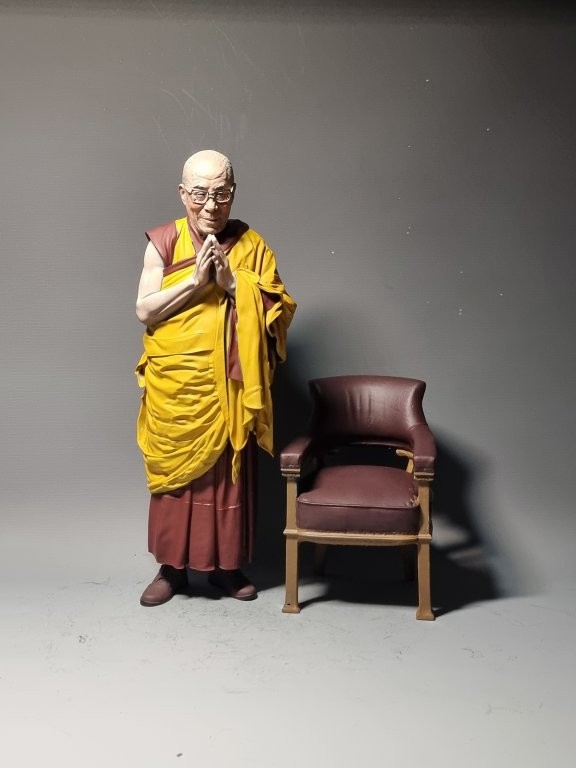
His Holiness the 14th Dalai Lama (1935–)
His Holiness the 14th Dalai Lama, Tenzin Gyatso, is one of the world's most influential spiritual leaders, renowned for his advocacy of peace, compassion and religious tolerance. Born in 1935 in a small village in northeastern Tibet, he was recognised at the age of two as the reincarnation of the 13th Dalai Lama. He was formally enthroned in 1940 and assumed full political authority in Tibet in 1950, at the age of fifteen.
Following the Tibetan uprising against Chinese rule in 1959, the Dalai Lama fled to India, where he established a government-in-exile in Dharamshala. From there, he became an international advocate for the preservation of Tibetan culture, religious freedom and the peaceful resolution of the Tibetan question. His commitment to non-violence and dialogue earned him the Nobel Peace Prize in 1989.
Over the following decades, the Dalai Lama travelled extensively, meeting world leaders, religious figures and ordinary people, while promoting universal human values and understanding between different faiths. His teachings emphasise kindness, forgiveness and the belief that genuine happiness comes from concern for the welfare of others. In 2011, he relinquished his remaining political authority to Tibet's democratically elected leadership, concentrating on his spiritual responsibilities.
Known for his infectious laughter, gentle humour and remarkable humility, the Dalai Lama has become a figure of international significance whose influence extends far beyond Tibetan Buddhism. Despite decades of exile, he remains a powerful symbol of peaceful resistance and the enduring importance of compassion in human affairs.